

Explore thousands of quality products, exclusive deals, and fast delivery options tailored just for you.


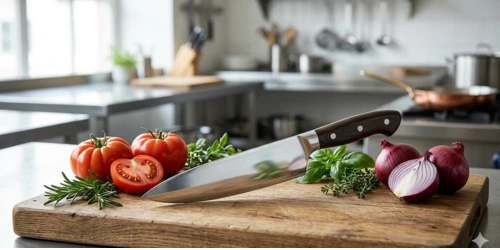
Finechef stocks and sells the knives and knife sets described in this guide. We have written it based on what we see students and chefs struggle with when buying their first serious blade in Kenya.
If you are looking for a knife set in Kenya for TVET hospitality course training, a home kitchen, or a professional brigade, the choices range from excellent to dangerously misleading. Hardware shops, supermarkets, and online marketplaces are stocked with knives that look the part but collapse within weeks of real use. This guide tells you exactly what to look for, what to avoid, and what a fair price looks like in the Kenyan market right now.
Walk into any supermarket or roadside hardware shop in Nairobi and you will find shiny knives priced between Ksh 100 and Ksh 900. They look reasonable because the blades are bright, the handles feel solid in the shop, and the price is easy to justify.
However, within two to three weeks of daily chopping, that blade will dull to the point where it is sawing rather than slicing. The handle eventually loosens. For a catering student in the middle of a practical module, or a home cook preparing daily family meals, a blunt knife slows you down, makes precision cuts impossible, and creates a genuine safety risk as you apply more pressure to compensate.
These are cheap, stamped-steel knives pressed from a single flat sheet of soft metal with no structural core running into the handle. They are manufactured to look like kitchen knives, not to perform like them. The cost of replacing two or three of these over a single semester adds up to more than one quality knife set bought once.
Two clear features determine whether a knife will hold up through serious daily use in a Kenyan kitchen or a professional catering environment.
A single good chef knife handles the majority of kitchen tasks, but professional catering training and real home cooking both demand a range of distinct blades. Your paring knife handles fine detail work like peeling, trimming, and deveining. Your bread knife slices through a loaf without crushing the crust. Your boning knife gives you clean separation on meat, while your chef knife does the heavy chopping, dicing, and slicing that forms the backbone of all meal prep.
For hospitality and catering students in Kenya, having multiple blades is a strict requirement. Practical modules at TVET colleges test you on specific preparation techniques, and each technique calls for the right blade. Arriving at a practical session with a single knife puts you at a disadvantage before you even start.
Buying these blades individually from different sources also means mismatched weight, balance, and steel quality across your kit. A matched knife set from a single brand gives you consistent feel and performance across every blade, which matters when you are working quickly under exam conditions or service pressure.
The knife brand that stands out in Kenya is Tramontina. Tramontina is a Brazilian manufacturer that has been producing professional kitchen equipment for over a century, and they currently supply commercial kitchens in more than 120 countries. You will find their knives stocked at a select highend outlets, which reflects a level of market credibility that generic brands simply do not have.
For Kenyan buyers, three key things make Tramontina worth the price difference over unbranded knives.
First, their blades are made from AISI 420 high-performance stainless steel, which is thermally treated for hardness and edge retention. This is the same grade of steel used in professional kitchen equipment worldwide, and it is specified clearly on the product rather than hidden behind vague marketing language.
Second, their handles are ergonomically designed for comfort and grip during extended prep sessions. This matters more than most buyers expect because a handle that causes fatigue or slips in a wet hand is a major safety issue.
Third, their professional range carries NSF certification, which is the international food safety standard required in commercial kitchens. This is particularly relevant for students heading into hotel and restaurant employment where equipment standards are strictly inspected.
We also stock quality generic knife sets for buyers who need a capable set at a lower price point. These are selected specifically for their full tang construction and decent steel quality, representing a meaningful step up from hardware-shop blades without carrying a brand premium.
Understanding what a fair price looks like protects you from overpaying and from buying something too cheap to last.
| Product Type | Target User | Price Range at FineChef |
| Quality generic knife set (3 to 5 pieces) | Budget-conscious students and home cooks | Ksh 2000 to Ksh 4000 |
| Tramontina single chef knife (8-10 inch) | Serious students, home cooks, and professional chefs | Ksh 4000 to Ksh 8000 |
As a matter of market context, a genuine Tramontina single knife retails between Ksh 4,000 and Ksh 8,000 depending on its size and purpose. Any multi-piece knife set priced below Ksh 2,000 in Kenya is almost certainly made of soft, stamped steel with no tang.
A quality knife poorly maintained becomes a poor knife within months. These three simple habits are all you need to protect your knife.
An 8-inch chef knife is the professional standard. It provides the necessary length and weight to cut heavy items like cabbages and butternut squash, but it remains nimble enough for fine dicing.
For catering students, a set is essential because your modules require different blades for different preparation techniques. For home cooks who cook daily, a set gives better long-term value. For someone who cooks occasionally, you can start with one quality 8-inch chef knife and add blades as your cooking develops.
No. Chef knives are engineered exclusively for produce and boneless meat. Forcing a fine steel edge through frozen food or thick animal bones will chip or shatter the high-carbon steel. You must use a heavy-duty meat cleaver for bone work.
If the marks are grey or blue-toned, this is a natural patina that forms when high-carbon steel reacts with acidic foods like tomatoes and onions. It is harmless and actually helps protect the blade from rust. Orange or red spots are actual rust, which means the knife is being stored while still wet. Dry your blade immediately after washing and this will not occur.
For occasional home cooking, a quality generic set from Finechef does the job well. For students heading into professional kitchens, or home cooks and chefs who use their knives heavily every day, the Tramontina difference in edge retention and handle comfort becomes noticeable very quickly. The better question is whether the price difference is worth the extended lifespan, and for most daily users, the answer is yes.
Finechef stocks authentic individual chef knives and complete cutlery sets with reliable delivery across Nairobi and all Kenyan counties.
Finechef is an online kitchenware and cookware marketplace in Kenya. Prices are correct at the time of publication.





Fast shipping all across the country

100% Authentic products

We ensure secure transactions

We ensure quality support
Explore thousands of quality products, exclusive deals, and fast delivery options tailored just for you.
 English